Bagintravel
Download
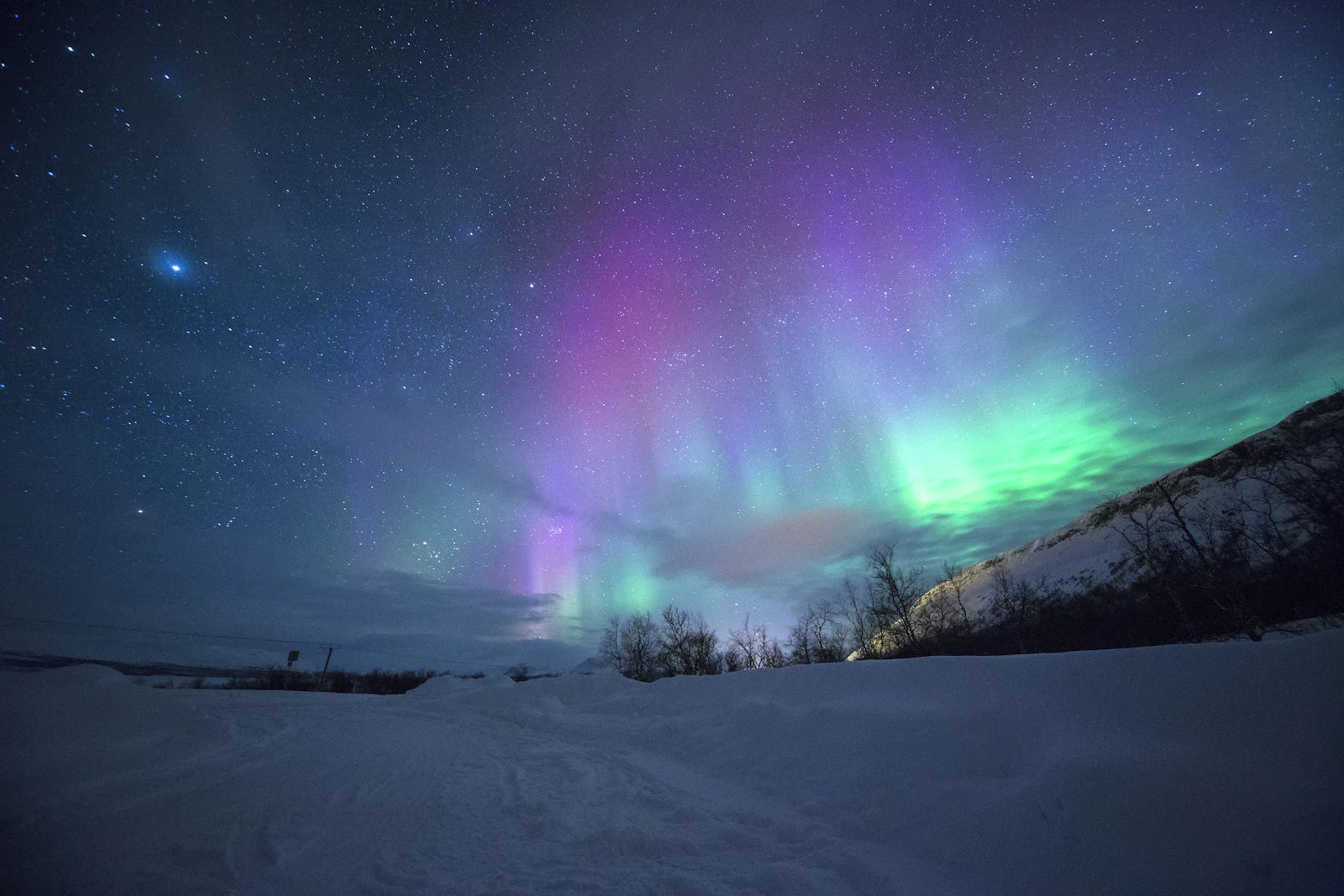
Northern lights

Travel guide · Dublin and the coast

Travelling to Ireland

Pubs with live music, cliffs above the Atlantic, castles and roads through the greenest fields. We tell you when to go, what to see in each city and what to eat.

Updated 19 October 2026 · How we make our guides

  • Best time: from March to October
  • Where to eat: the pub
Photo: Unsplash

Ireland in 30 seconds

  • The months with the fewest warnings to travel to Ireland are from March to October.
  • Leap Card.
  • To eat like a local: the pub. Don’t leave without trying: Irish stew, Full Irish breakfast, Soda bread.

Ireland in November

You can go, with a few caveats: short days and storms. For the west coast, May to September is better; in winter, Dublin and the cities.

  • November

    Short days and storms

    In winter it gets dark very early and Atlantic storms can close coast roads and ferries to the islands.

    What to do: For the west coast, May to September is better; in winter, Dublin and the cities.

November is one of the months when people search most for travelling to Ireland: book early. More destinations for November

When to travel to Ireland

The months with the fewest warnings to travel to Ireland are from March to October.

  1. Jan with warnings
  2. Feb with warnings
  3. Mar no warnings
  4. Apr no warnings
  5. May no warnings
  6. Jun no warnings
  7. Jul no warnings
  8. Aug no warnings
  9. Sep no warnings
  10. Oct no warnings
  11. Nov with warnings
  12. Dec with warnings

More destinations for those dates: where to travel in March · where to travel in April · where to travel in May · where to travel in June

  • from November to February

    Short days and storms

    In winter it gets dark very early and Atlantic storms can close coast roads and ferries to the islands.

    What to do: For the west coast, May to September is better; in winter, Dublin and the cities.

What to see in Ireland

The cities and areas most worth your time, with their highlights. Open each one for all the places, where to stay and its day trips.

  • Dublin
    Dublin

    Dublin

    The pubs of Temple Bar, Trinity College and its library, the Guinness Storehouse and a city made for walking.

    • Trinity College
    • Guinness Storehouse
    • Howth
    • Cliffs of Moher (day trip)
    Dublin guide
  • Galway

    Galway

    The most bohemian city in the west: music in every pub and the gateway to Connemara and the Cliffs of Moher.

    • Latin Quarter
    • Spanish Arch
    • Galway Cathedral
    • Salthill Promenade
    Galway guide
  • Cork

    Cork

    The country’s second city, a great place to eat, between two channels of the River Lee.

    • English Market
    • Shandon Church
    • St Fin Barre’s Cathedral
    • Blarney Castle
    Cork guide
  • Killarney

    Killarney

    Lakes, mountains and castles in Killarney National Park, the starting point of the Ring of Kerry.

    • Killarney National Park
    • Ross Castle
    • Muckross House
    • Gap of Dunloe
    Killarney guide
  • Kilkenny

    Kilkenny

    A medieval city with a castle, a cathedral and a mile of historic streets.

    • Kilkenny Castle
    • St Canice’s Cathedral
    • Medieval Mile
    • Rothe House
    Kilkenny guide
  • Dingle

    Dingle

    A fishing town of colourful houses on a wild peninsula in the far west.

    • Slea Head Drive
    • Dingle Harbour
    • Conor Pass
    • Inch Beach
    Dingle guide
  • Limerick

    Limerick

    A city on the Shannon with King John’s Castle and a weekend market.

    • King John’s Castle
    • Co-Cathedral of Santa María
    • Hunt Museum
    • Milk Market
    Limerick guide
  • Westport

    Westport

    A lively town on Clew Bay, at the foot of Ireland’s holy mountain.

    • Croagh Patrick
    • Great Western Greenway
    • Westport House
    • Clew Bay
    Westport guide
  • Kinsale

    Kinsale

    A harbour of colourful houses, the food capital of the south, with a star fort above the bay.

    • Kinsale Harbour
    • Charles Fort
    • Old Head of Kinsale
    • Scilly Walk
    Kinsale guide
  • Waterford

    Waterford

    The city the Vikings founded, famous for its cut crystal.

    • Viking Triangle
    • Reginald’s Tower
    • House of Waterford Crystal
    • Waterford Greenway
    Waterford guide
  • Cliffs of Moher

    Cliffs of Moher

    Cliffs more than two hundred metres high above the Atlantic, Ireland’s most famous image.

    • Main viewpoint
    • O’Brien’s Tower
    • Cliff path
    • Doolin
    Cliffs of Moher guide
  • Connemara

    Connemara

    The wild landscape of the west of Ireland: mountains, lakes, bogs and Kylemore Abbey.

    • Kylemore Abbey
    • Connemara National Park
    • Clifden
    • Sky Road
    Connemara guide
  • Glendalough

    Glendalough

    A medieval monastery with a round tower in a glacial valley in the Wicklow Mountains.

    • Round tower
    • St Kevin’s Monastery
    • Upper Lake
    • Wicklow Mountains
    Glendalough guide

What to eat in Ireland

To eat like a local: the pub, and order Irish stew or seafood chowder. And don’t leave without trying:

  • Irish stew

    A lamb stew with potato, carrot and onion.

  • Full Irish breakfast

    Eggs, bacon, sausages, white and black pudding, beans and tomato.

  • Soda bread

    Bread made with bicarbonate of soda and buttermilk, no yeast.

  • Seafood chowder

    A creamy fish and seafood soup with brown bread.

  • Boxty

    A grated potato pancake, typical of the west.

  • Galway oysters

    With a pint of stout, as tradition dictates.

The typical dish of Ireland, at home

Irish stew
Photo: charles Haynes · CC BY-SA 2.0

Irish stew

The Irish stew of lamb, potato, onion and carrot, slow-cooked. It was the food of country families and is now on every pub menu, with a pint of stout.

  • Serves 6
  • 2 h 30 min

Ingredients

  • 1 kg lamb neck or shoulder, in pieces
  • 1 kg potatoes
  • 3 carrots
  • 2 onions
  • 1 l lamb or chicken stock
  • Thyme and bay leaf
  • Parsley
  • Salt and pepper

How to make it at home

  1. Brown the lamb in a pot with a little oil. Set aside.
  2. Soften the onions and the carrots, cut into large pieces.
  3. Return the meat, add half the potatoes in small pieces (they’ll thicken the stew), the stock, thyme and bay leaf.
  4. Simmer gently, covered, for 1½ hours; add the rest of the potatoes in large chunks for the last 40 minutes.
  5. Season and serve with parsley and soda bread.

The trick: With stout in the stock, as in many Dublin pubs, it’s richer.

The typical food of each city, with a recipe

Curious facts about Ireland

What guidebooks don’t tell you and will help you understand the country better.

  • They call it the Emerald Isle: it rains often, lightly and all year round, which is why it’s so green.
  • The harp is the country’s official symbol: it’s on the coat of arms, the passport and the coins.
  • Irish Gaelic is an official language; signs are in both languages.
  • Halloween has its origins in Samhain, a Celtic end-of-summer festival.
  • They drive on the left.
  • Waterford, founded by Vikings, prides itself on being the oldest city in the country.

Traditions of Ireland

Customs and celebrations that will help you experience the country like a local.

  • 17 March St Patrick’s Day

    The national holiday: parades, green everywhere and packed pubs.

  • Music sessions

    Musicians who gather in the pub to play traditional music; anyone can listen.

  • 16 June Bloomsday

    Dublin relives Joyce’s Ulysses with readings and people in period dress.

  • 31 October Samhain and Halloween

    The Celtic festival that gave rise to Halloween, with parades in Dublin and Derry.

What not to do in Ireland

First-trip mistakes that are easy to avoid.

  • Don’t leave a pub in the middle of a round: drinks are bought in turns.
  • Don’t confuse Ireland with the United Kingdom: Northern Ireland is part of the UK; the Republic isn’t.
  • Don’t go near the edge of the cliffs: the wind is treacherous.
  • Don’t go out without a rain jacket, even in summer.
  • Don’t set off driving before you’re used to the left-hand side and very narrow roads.
  • Don’t count on a late dinner in a pub: many kitchens close early.

Before you go

Entry requirements depend on your passport and change: always check them with official sources before travelling.

Frequently asked questions about Ireland

What people search for most before travelling to Ireland.

What’s the best time to travel to Ireland?

The months with the fewest warnings to travel to Ireland are from March to October.

What to see in Ireland in a week?

The essentials of Ireland: Dublin, Galway, Cork, Killarney and Kilkenny. How many places fit into your days, and in what order, depends on your dates and how you get around: the Bagintravel app plans your trip day by day in a minute.

What to eat in Ireland?

Irish stew, Full Irish breakfast, Soda bread, Seafood chowder, Boxty, Galway oysters. To eat like a local: the pub.

What is the typical dish of Ireland?

Irish stew. The Irish stew of lamb, potato, onion and carrot, slow-cooked. It was the food of country families and is now on every pub menu, with a pint of stout.

What should you not do in Ireland?

Don’t leave a pub in the middle of a round: drinks are bought in turns. Don’t confuse Ireland with the United Kingdom: Northern Ireland is part of the UK; the Republic isn’t. Don’t go near the edge of the cliffs: the wind is treacherous.

Is it worth travelling to Ireland in November?

You can go, with a few caveats: short days and storms. For the west coast, May to September is better; in winter, Dublin and the cities.

Bagintravel · We travel together

Shall we plan your trip to Ireland?

Tell us where and in under a minute you’ll have your day-by-day route, with places to stay, transport, expenses and tips. And we go with you in your pocket, offline too.

The app is currently available in Spanish.

More guides

Guide reviewed 19 October 2026. Seasonal data, places and areas: the same ones the Bagintravel app uses. Sources and method.

Photos: cover, Unsplash. Dublin, 瑞丽江的河水 (CC BY-SA 4.0). Galway, Meep at German Wikipedia (CC BY-SA 3.0). Cork, Antonio Leyva (CC BY 3.0 es). Killarney, Alan Heardman (CC BY-SA 2.0). Kilkenny, Wikimedia Commons (CC BY-SA 3.0). Dingle, Wikimedia Commons (CC BY-SA 3.0). Limerick, mandoft from El Campello (Alicante), Spain (CC BY-SA 2.0). Westport, MickReynolds (CC BY-SA 4.0). Kinsale, Rosalind Mitchell (CC BY-SA 2.0). Waterford, Nmwalsh (CC BY-SA 4.0). Cliffs of Moher, Berthold Werner (CC BY-SA 4.0). Connemara, JoachimKohler-HB (CC BY-SA 4.0). Glendalough, Ramón (CC BY-SA 2.0).