Bagintravel
Download
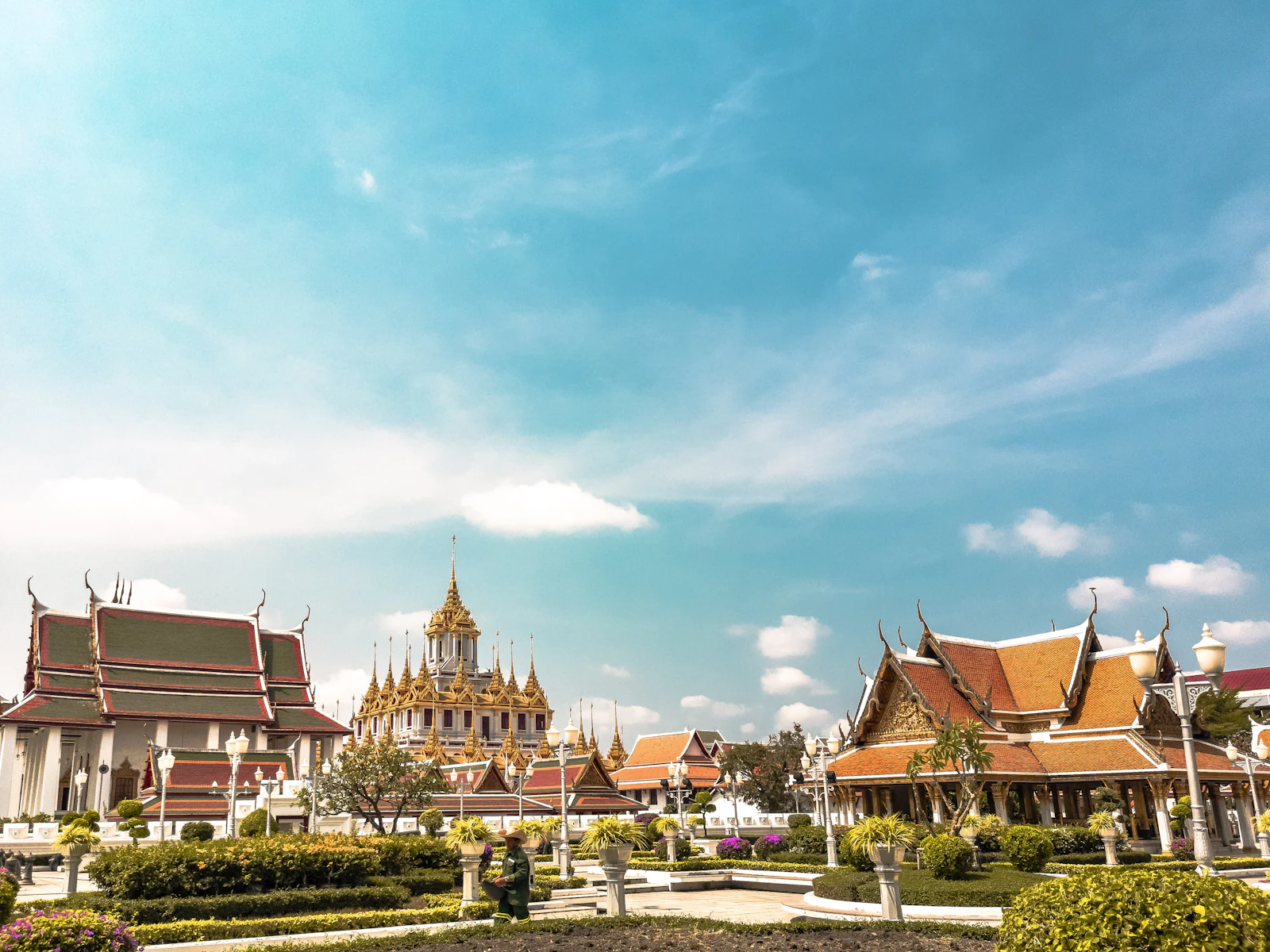
Golden temple

Travel guide · Temples, islands and street food

Travelling to Thailand

Golden temples, turquoise-water islands and some of the best street food in the world. We tell you when to go, what to see, what to eat and what’s worth knowing.

Updated 19 October 2026 · How we make our guides

  • Best time: from November to February
  • Where to eat: the street stall
Photo: Unsplash

Thailand in 30 seconds

  • The months with the fewest warnings to travel to Thailand are from November to February. If you can, avoid April (intense heat).
  • The Grand Palace requires covered shoulders and knees.
  • To eat like a local: the street stall. Don’t leave without trying: Pad thai, Pad kra pao, Tom yum kung.

Thailand in November

Yes: November is a good time to travel to Thailand. Our data shows no weather or seasonal warnings that month. In November: Loy Krathong.

November is one of the months when people search most for travelling to Thailand: book early. More destinations for November

When to travel to Thailand

The months with the fewest warnings to travel to Thailand are from November to February. If you can, avoid April (intense heat).

  1. Jan no warnings
  2. Feb no warnings
  3. Mar with warnings
  4. Apr with strong warnings
  5. May with warnings
  6. Jun with warnings
  7. Jul with warnings
  8. Aug with warnings
  9. Sep with warnings
  10. Oct with warnings
  11. Nov no warnings
  12. Dec no warnings

More destinations for those dates: where to travel in January · where to travel in February · where to travel in November · where to travel in December

  • from March to May

    Intense heat

    From March to May temperatures reach 35–40 °C with high humidity; April is the toughest month.

    What to do: Visit temples at sunrise, rest at midday and drink plenty of water.

    Best time: November to February

  • from June to October

    Rainy season

    It’s usually heavy afternoon downpours, not whole days of rain. Everything is greener and there are fewer tourists.

    What to do: Plan outdoor visits for the morning and save the afternoon for museums, covered markets or a massage.

    Best time: November to February

Festivals and special moments

  • November

    Loy Krathong

    A night of lanterns and floating offerings on rivers and lakes (the November full moon).

  • April

    Songkran · Thai New Year

    A water festival in the streets and squares. Wear clothes you don’t mind getting wet.

What to see in Thailand

The cities and areas most worth your time, with their highlights. Open each one for all the places, where to stay and its day trips.

  • Bangkok
    Bangkok and the centre

    Bangkok

    Golden temples, markets and rooftop bars: the country’s gateway and its street-food capital.

    • Grand Palace
    • Wat Arun
    • Chatuchak Market
    • Chinatown · Yaowarat
    Bangkok guide
  • Chiang Mai
    The north

    Chiang Mai

    The peaceful north: temples among the mountains, night markets and elephant sanctuaries.

    • Wat Phra That Doi Suthep
    • Old City Walls
    • Wat Chedi Luang
    • Sunday Night Market
    Chiang Mai guide
  • Krabi
    Southern islands

    Krabi

    Limestone cliffs, Railay and boat trips to the islands of the Andaman Sea.

    • Railay Beach
    • Ao Nang
    • Hong Island
    • Tiger Cave Temple
    Krabi guide
  • Phuket
    Southern islands

    Phuket

    The largest island: beaches, the Sino-Portuguese old town and trips to Phi Phi and Phang Nga.

    • Phuket Old Town
    • Promthep Cape
    • Big Buddha
    • Surin Beach
    Phuket guide
  • Pattaya

    Pattaya

    Bangkok’s beach: a city of entertainment and nightlife, with a carved wooden temple and Koh Larn island just offshore.

    • Sanctuary of Truth
    • Koh Larn
    • Pratumnak viewpoint
    • Floating market
    Pattaya guide
  • Koh Samui

    Koh Samui

    An island of coconut palms with long beaches, the Big Buddha and Ang Thong Marine Park.

    • Chaweng Beach
    • Big Buddha
    • Hin Ta and Hin Yai rocks
    • Ang Thong Marine Park
    Koh Samui guide
  • Ayutthaya

    Ayutthaya

    The former capital of the Kingdom of Siam, with UNESCO-listed temple ruins an hour from Bangkok.

    • Wat Mahathat
    • Wat Chaiwatthanaram
    • Wat Phra Si Sanphet
    • Bang Pa-In Palace
    Ayutthaya guide
  • Chiang Rai

    Chiang Rai

    The city of the White Temple, the Blue Temple and the Black House, near the Golden Triangle.

    • White Temple
    • Blue Temple
    • Black House
    • Golden Triangle
    Chiang Rai guide
  • Phi Phi Islands

    Phi Phi Islands

    Islands of limestone cliffs and turquoise water, with Maya Bay and the Phi Phi Don viewpoint.

    • Phi Phi Don viewpoint
    • Maya Bay
    • Pileh Lagoon
    • Monkey Beach
    Phi Phi Islands guide
  • Hua Hin

    Hua Hin

    The royal family’s summer beach resort, peaceful, with night markets and a wooden railway station.

    • Hua Hin Beach
    • Railway station
    • Night market
    • Mrigadayavan Palace
    Hua Hin guide
  • Koh Lanta

    Koh Lanta

    A laid-back Andaman Sea island, with long beaches, sunsets and a family- and couple-friendly feel.

    • Long Beach
    • Old Town
    • Mu Ko Lanta National Park
    • Koh Rok
    Koh Lanta guide
  • Koh Phangan

    Koh Phangan

    Famous for the Full Moon Party at Haad Rin, but it also has quiet coves, jungle and waterfalls.

    • Haad Rin
    • Bottle Beach
    • Thong Nai Pan
    • Khao Ra viewpoint
    Koh Phangan guide
  • Koh Tao

    Koh Tao

    The little diving island: one of the most popular places in the world to get certified, with coral coves and reef sharks.

    • Koh Nang Yuan
    • Sairee Beach
    • Tanote Bay
    • Shark Bay
    Koh Tao guide
  • Kanchanaburi

    Kanchanaburi

    The Bridge on the River Kwai and the Second World War Death Railway, among waterfalls and jungle west of Bangkok.

    • Bridge on the River Kwai
    • Death Railway
    • War cemetery
    • Erawan Falls
    Kanchanaburi guide
  • Pai

    Pai

    A mountain village in the north, among rice fields and hills, famous for its laid-back vibe and the winding road that leads to it.

    • Pai Canyon
    • Night market
    • Mo Paeng Waterfall
    • Bamboo bridge
    Pai guide
  • Sukhothai

    Sukhothai

    The first capital of the Kingdom of Siam: a historical park of temples and Buddhas among ponds, perfect for exploring by bike.

    • Wat Mahathat
    • Wat Si Chum
    • Wat Sa Si
    • Loy Krathong
    Sukhothai guide

Day trips and activities

What’s most worth booking from each city. We take you straight to the best-rated tour on GetYourGuide, with its reviews and dates.

From the Phi Phi Islands

Some links are affiliate links: if you book through them, Bagintravel may earn a commission at no extra cost to you.

What to eat in Thailand

To eat like a local: the street stall, and order pad kra pao or soup from the stall on the corner. And don’t leave without trying:

  • Pad thai

    Stir-fried noodles with egg, tamarind and peanuts: the street-stall classic.

  • Pad kra pao

    Minced meat with holy basil and chilli, with rice and a fried egg: what a Thai person orders.

  • Tom yum kung

    A hot and sour prawn soup with lemongrass and kaffir lime.

  • Som tam

    Green papaya salad pounded in a mortar; ask for it “mai phet” if you don’t want it spicy.

  • Khao soi

    Curry noodle soup with crispy noodles on top, the dish of the north: try it in Chiang Mai.

  • Mango sticky rice

    Sticky rice with coconut milk and mango: the dessert you’ll want again.

The typical dish of Thailand, at home

Tom yum goong
Photo: OpenCage · CC BY-SA 2.5

Tom yum goong

Thailand’s hot and sour soup, with prawns, lemongrass, galangal, kaffir lime leaves and chilli. Its balance of spicy, sour, salty and sweet sums up Thai cooking.

  • Serves 4
  • 30 min

Ingredients

  • 400 g shell-on prawns with heads
  • 1 l chicken stock (or stock made from the prawn heads)
  • 3 lemongrass stalks
  • 1 piece of galangal or ginger
  • 5 kaffir lime leaves
  • 200 g mushrooms or straw mushrooms
  • 3–5 Thai chillies
  • 3 tablespoons of fish sauce
  • The juice of 2 limes
  • 1 tablespoon of chilli paste (nam prik pao, optional)
  • Fresh coriander

How to make it at home

  1. Peel the prawns and boil the heads and shells in the stock for 10 minutes for flavour. Strain.
  2. Bruise the lemongrass and cut it into pieces; slice the galangal and tear the lime leaves.
  3. Boil the stock with the lemongrass, galangal and kaffir lime for 5 minutes.
  4. Add the mushrooms, the crushed chillies and the chilli paste, then the prawns: 2 minutes is enough.
  5. Off the heat, add the fish sauce and lime juice. Taste, adjust and serve with coriander.

The trick: The lime goes in off the heat: if it boils, it turns bitter.

The typical food of each city, with a recipe

Curious facts about Thailand

What guidebooks don’t tell you and will help you understand the country better.

  • Thailand is the only country in Southeast Asia never colonised by a European power.
  • The royal family is deeply respected: the anthem plays in cinemas and, at 8 am and 6 pm, in many public spaces, and people stop still.
  • Many Thais use a short nickname instead of their name, which can be very long.
  • Spiciness is ordered by level: “mai phet” means not spicy.
  • Songkran, the Thai New Year in April, is celebrated with a water fight across the whole country.
  • 7-Elevens are everywhere and are the traveller’s best friend: water, snacks and hot toasties.

Traditions of Thailand

Customs and celebrations that will help you experience the country like a local.

  • 13–15 April Songkran

    The Thai New Year: water fights in the streets and visits to temples. Keep your phone in a waterproof case.

  • November (full moon) Loy Krathong

    Little baskets with candles are floated on rivers and lakes to let go of the bad; in Chiang Mai it coincides with Yi Peng and its lanterns.

  • The wai

    The greeting with palms pressed together and a slight bow of the head. If someone gives you one, return it; with children or in a shop, a smile is enough.

  • At dawn Alms for the monks

    Monks walk the streets collecting food. If you see it, watch in silence and without flash.

What not to do in Thailand

First-trip mistakes that are easy to avoid.

  • Don’t touch anyone’s head or point with your foot: the head is the most sacred part of the body and the feet the lowest.
  • Don’t go into temples with bare shoulders or knees: at the Grand Palace they won’t let you in.
  • Don’t speak badly of the royal family or step on a banknote that falls: it bears the King’s image.
  • Don’t get into a tuk-tuk offering a “cheap tour”: it usually ends up at jewellery shops and tailors.
  • Don’t ride elephants or go to animal shows: choose ethical sanctuaries where there’s no riding.
  • Don’t lose your temper or raise your voice: losing your cool is very frowned upon.

Before you go

Entry requirements depend on your passport and change: always check them with official sources before travelling.

  • Entering the country

    Visas, electronic authorisations and health requirements for Thailand depend on your nationality. Check your government’s official travel advice and the embassy before you book.

    UK: foreign travel advice (GOV.UK) US: travel advisories (travel.state.gov)
  • Traveller tips

    The Grand Palace requires covered shoulders and knees.

    Grab in cities; negotiate longtail boats on the islands.

    Withdraw cash in shopping centres for a better exchange rate.

Frequently asked questions about Thailand

What people search for most before travelling to Thailand.

What’s the best time to travel to Thailand?

The months with the fewest warnings to travel to Thailand are from November to February. If you can, avoid April (intense heat).

What to see in Thailand in a week?

The essentials of Thailand: Bangkok, Chiang Mai, Krabi, Phuket and Pattaya. How many places fit into your days, and in what order, depends on your dates and how you get around: the Bagintravel app plans your trip day by day in a minute.

What to eat in Thailand?

Pad thai, Pad kra pao, Tom yum kung, Som tam, Khao soi, Mango sticky rice. To eat like a local: the street stall.

What is the typical dish of Thailand?

Tom yum goong. Thailand’s hot and sour soup, with prawns, lemongrass, galangal, kaffir lime leaves and chilli. Its balance of spicy, sour, salty and sweet sums up Thai cooking.

What should you not do in Thailand?

Don’t touch anyone’s head or point with your foot: the head is the most sacred part of the body and the feet the lowest. Don’t go into temples with bare shoulders or knees: at the Grand Palace they won’t let you in. Don’t speak badly of the royal family or step on a banknote that falls: it bears the King’s image.

Is it worth travelling to Thailand in November?

Yes: November is a good time to travel to Thailand. Our data shows no weather or seasonal warnings that month. In November: Loy Krathong.

Bagintravel · We travel together

Shall we plan your trip to Thailand?

Tell us where and in under a minute you’ll have your day-by-day route, with places to stay, transport, expenses and tips. And we go with you in your pocket, offline too.

The app is currently available in Spanish.

More guides

Guide reviewed 19 October 2026. Seasonal data, places and areas: the same ones the Bagintravel app uses. Sources and method.

Photos: cover, Unsplash. Bangkok, Diego Delso (CC BY-SA 3.0). Chiang Mai, Supanut Arunoprayote (CC BY 4.0). Krabi, Christophe95 (CC BY-SA 4.0). Phuket, ADwarf (Public domain). Pattaya, Don Ramey Logan (CC BY-SA 3.0). Koh Samui, Vyacheslav Argenberg (CC BY 4.0). Ayutthaya, ErwinMeier (CC BY-SA 4.0). Chiang Rai, Jakub Hałun (CC BY-SA 4.0). Phi Phi Islands, Caitriana Nicholson from 北京 ~ Beijing, 中国 ~ China (CC BY-SA 2.0). Hua Hin, Suikotei (CC BY 4.0). Koh Lanta, Fabio Achilli (CC BY 2.0). Koh Phangan, kaaist (CC0). Koh Tao, Benedict Quirbach (Public domain). Kanchanaburi, PumpkinSky (CC BY-SA 4.0). Pai, Sgroey (CC BY-SA 4.0). Sukhothai, This Photo was taken by Supanut Arunoprayote. Feel free to use any of my images, (CC BY 4.0).